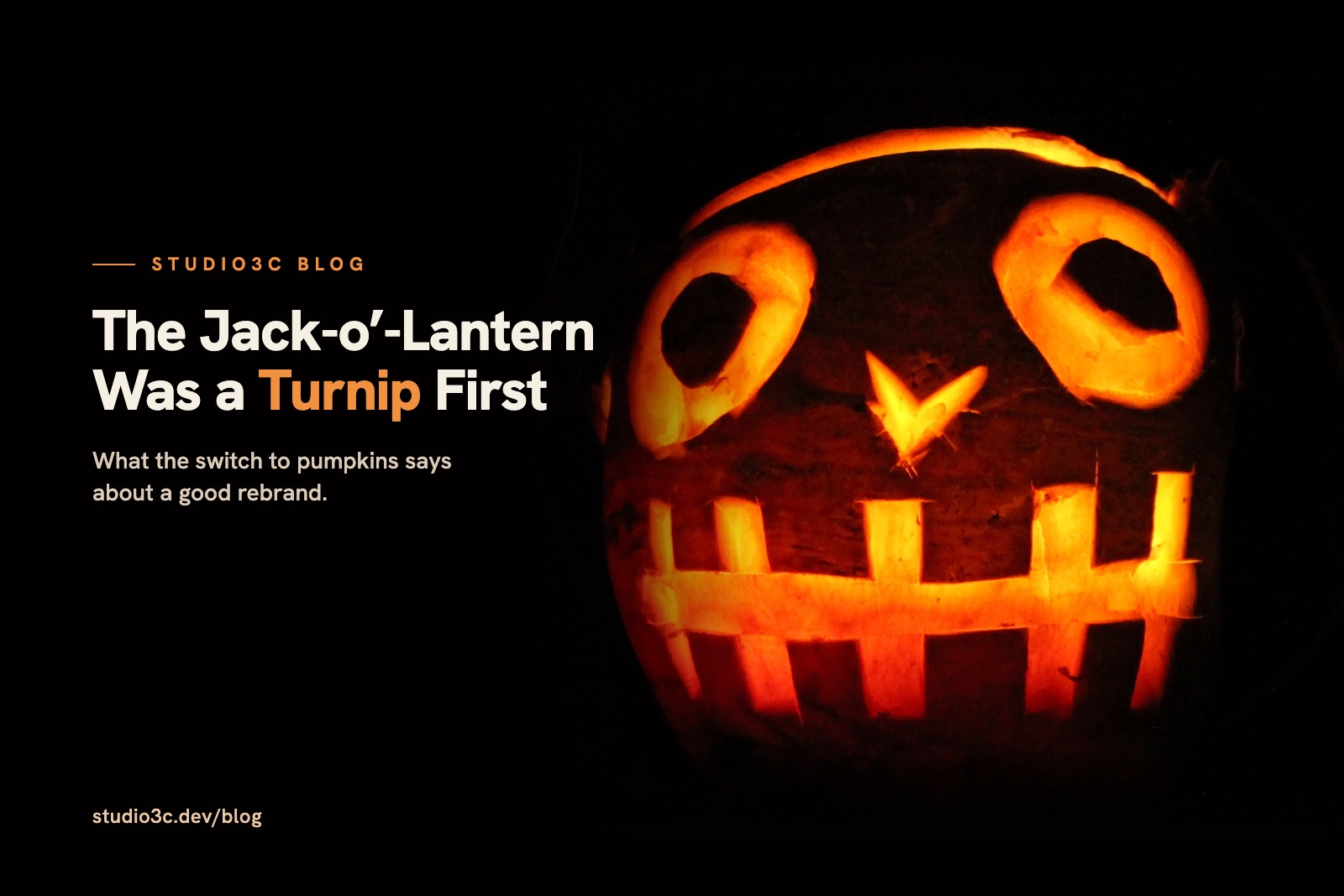
Picture Halloween without pumpkins. No orange glow on the porch, no seeds all over the kitchen counter, no debate over whether the face should be scary or goofy. Just a lumpy turnip jack-o'-lantern glaring at you from the windowsill.
That's not a spooky alternate universe. It's history. Long before pumpkins took over, people in Ireland and Scotland carved faces into turnips. The jack-o'-lantern we know today is the result of a remarkably successful makeover, and it holds a surprisingly useful lesson for anyone running a business.
Meet Stingy Jack
The tradition is tied to an Irish legend about a man called Stingy Jack. As HISTORY.com tells it, Jack tricked the Devil not once but twice. When Jack finally died, neither heaven nor hell would take him, so the Devil sent him off into the night with a single burning coal. Jack put the coal inside a carved-out turnip and has been wandering the Earth with it ever since. According to HISTORY.com, the legend first appeared in print in the 19th century.
In Ireland and Scotland, people carved scary faces into turnips and set them in windows or near doors to keep Stingy Jack and other wandering spirits away. In England, they used large beets. Think of it as the original home security system: no motion sensors, no app, just a glaring vegetable on watch duty.
Then the jack-o'-lantern became a pumpkin
When Irish immigrants came to America in the 19th century, they brought the tradition with them, and they arrived in what HISTORY.com calls the "home of the pumpkin." Over time, people swapped turnips for pumpkins, which Mental Floss describes as "both abundant and conducive to carving." HISTORY.com notes that these immigrant traditions helped turn pumpkin carving from a general fall pastime into something tied specifically to Halloween.
What the pumpkin teaches us about branding
Notice what changed and what didn't. The story stayed the same: a carved face, a light inside, a little protection against the dark. What changed was the container. The pumpkin was easier to work with, easy to find in its new home, and big enough to make a real statement on a front porch.
That's what a good rebrand does. It keeps what people already love about you and upgrades whatever is holding you back. A logo refresh, a cleaner website or better photos aren't about pretending to be someone new. They're about giving the same story a bigger, brighter lantern.
Halloween is big business
Today, Halloween is a lot more than a turnip in the window. The National Retail Federation's 2026 survey of 7,889 consumers, conducted September 1 to 9, found that:
Halloween spending is expected to reach $13.5 billion, up from last year's record of $13.1 billion.
74% of consumers plan to celebrate, spending an average of $115.14 each.
49% planned to start shopping in September or earlier.
Online searches are the top source of costume inspiration, at 32%.
13% plan to shop at local and small businesses, almost double the 7% who said so in 2016.
Two of those numbers matter most for a small business. Nearly half of shoppers start shopping in September or earlier, and the most popular place to find costume ideas is an online search. If people are looking before you're ready to be found, it's like decorating your porch on November 1.
How to give your business the pumpkin treatment
You don't need a costume shop to take something from this. Every season, and every holiday, rewards the businesses that are easy to find and easy to love. Here's where Studio3C can help:
Branding. Like the jump from turnip to pumpkin, a brand refresh keeps your story and gives it a better vessel. That might mean a cleaner logo, a sharper color palette or a consistent look across your sign, your site and your socials.
Website design and development. Your website is your front porch. A seasonal banner, a holiday landing page or a quick menu update tells visitors the lights are on and someone's home.
SEO. If search is where people go looking for ideas, showing up in those results matters. Clear page titles, accurate descriptions and an up-to-date Google Business Profile help customers find you when they're looking.
Photography. A carved pumpkin only works if people can see the face. Real photos of your products, your space and your team do the same job online, and they show customers what generic stock images can't: what it's actually like to walk through your door.
Digital marketing and social media. With nearly half of shoppers starting early, the time to start promoting a seasonal offer is before the season, not during it. A simple content calendar keeps you a step ahead.
One quick win you can do today: if your hours change for Halloween night or the holidays ahead, Google Business Profile lets you set special hours for specific dates, so nobody shows up to a dark storefront.
Keep your light on
Stingy Jack has been wandering with his lantern for generations, and the pumpkin made sure people would never forget him. Your business deserves the same staying power: a story worth telling and a look that helps it shine.
If your brand is still carving turnips, let's talk. Get in touch with Studio3C and let's give your business the glow-up it's been waiting for. Happy Halloween!